

Most Players Will Never See The Best Level In Tears of the Kingdom
This post can also be found on my Linkedin here!
As a level designer, I see Tears of the Kingdom as a masterclass in the power of player freedom and subtle guidance. Its world design encourages exploration by offering countless curiosities everywhere you look, with limitless ways to reach them. Even in this screenshot below, multiple objects will immediately draw the eye, as if begging to be investigated.
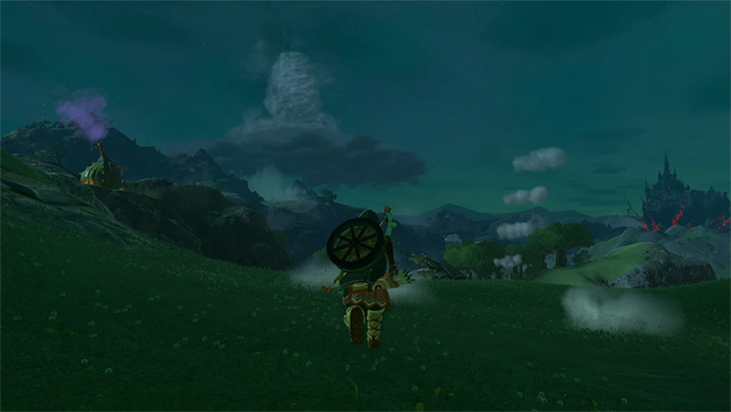
But there’s one landmark in particular that stands out not by the freedom it offers, but by what it takes away from the player to test them. It’s an incredible lesson in trust, risk, and player agency that all game devs should experience, but most players will never see.
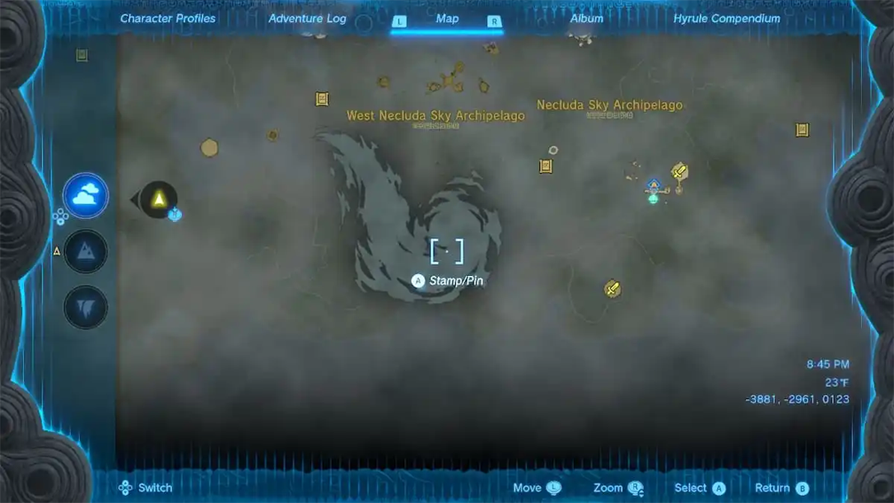
Thunderhead Isles is the perfect example of player agency harnessed in level design, presented as a mysterious island shrouded in impassable storms. If the player chooses to stick to the expected story path, they will naturally be lead to clear the storm around the isles, and explore without issue. But that route, like everything else in the game, is but one possible answer to the challenge the game offers. If the player decides to let the curiosity the game has fostered guide them, they will discover how the storm is not a wall. It’s an invitation.
Challenge 1: The Trip
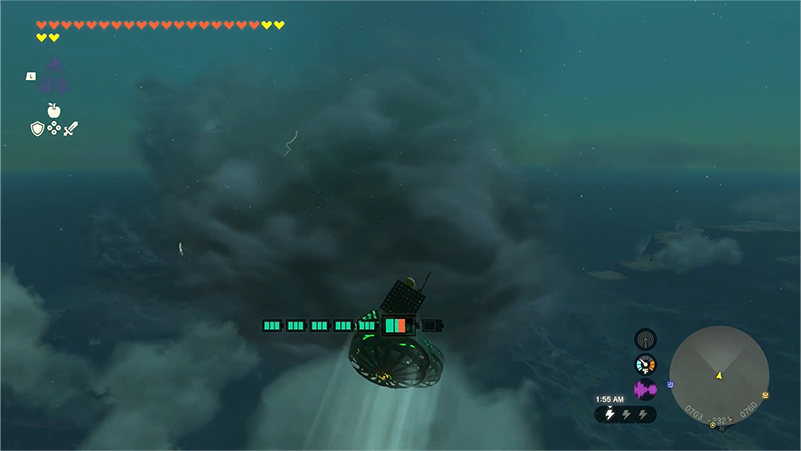
Getting to the isles in the first place is a feat itself, as gliders can’t even reach it from other sky islands. Without a tower or a warp point nearby, the player has fewer options for reaching their goal. Thunderhead Isles’ remote location makes the simple task of traveling into a risky endeavor that asks the player to think carefully and engage with every tool in their arsenal. Even just rising to the occasion becomes a test for the player, enhancing the sense of danger and risk through gameplay. And then, of course, you have to worry about landing, because of…
Challenge 2: Visibility
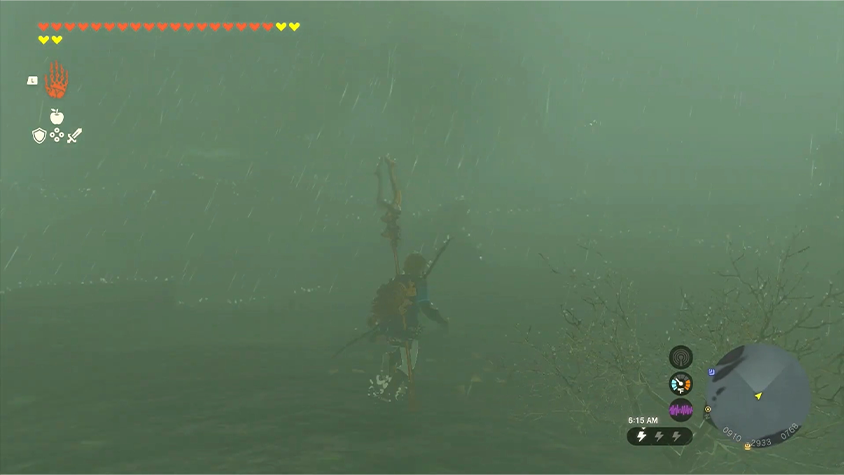
The most obvious thing Thunderhead Isles takes from the player is their sight. As soon as they land, the player loses the ability to see. One wrong step will have Link fall out of the sky, forced to start over. But even with this looming threat, the game hands over trust to observant players, offering other ways to navigate. Thunderhead’s fearsome weather creates a dim halo of raindrops to hint what’s around you, and lightning strikes illuminate the area briefly. A level’s standout feature can be a powerful tool, as well as a persistent hazard to contend with.
Challenge 3: Weather
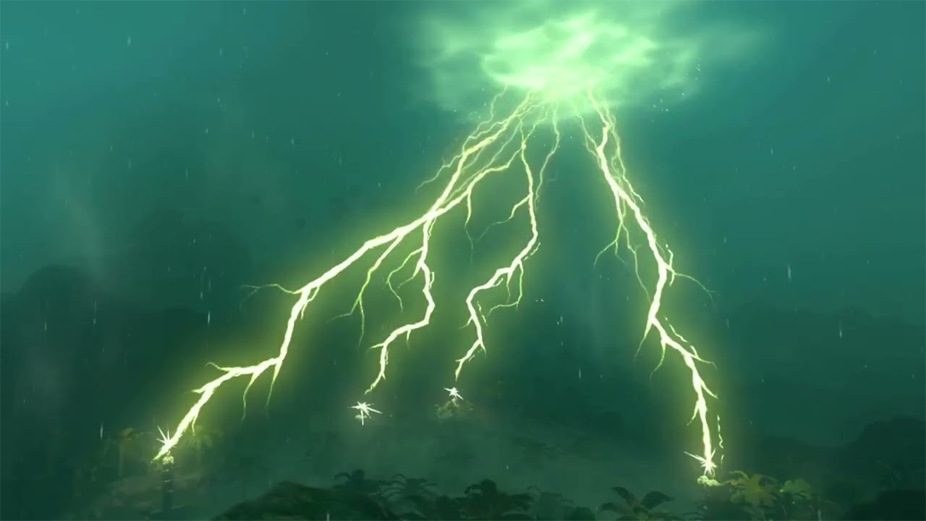
Not only is lightning constantly striking to light up the area, it also keeps the player from using their powerful metal weapons. The rain even prevents them from climbing around the isle’s puzzles. It’s a perfect one-two punch against the player, finding a diegetic way to take away their arsenal and their most reliable traversal tool at the same time. This way, the game encourages you to engage with the level from its intended position, without feeling like it’s actually robbing you of agency.
Challenge 4: Trust
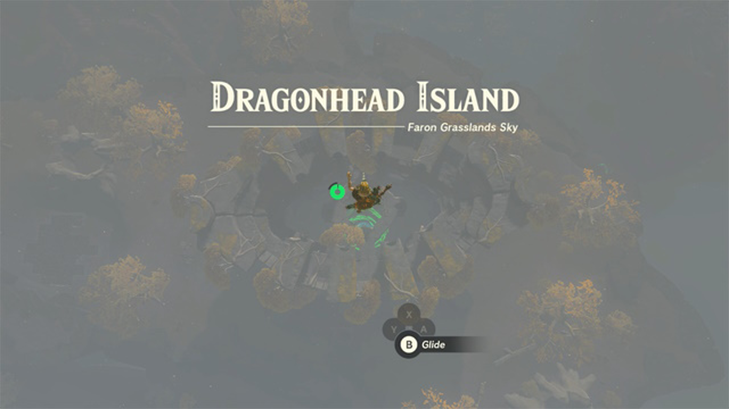
And at the end of it all, once the player has overcome all challenges put before them, they must complete one final trial: a leap of faith. The player has dealt with blindness, disarmament, and disorientation for the entire journey, and now they are even Forced to defy their instincts and trust in the skills they have gained navigating the storm. Guided only by the game’s optional shrine tracker, they must jump into the blinding rain toward the source of the signal. If they can make it into the literal eye of the storm, they will find the end of the isles, and prove their skill in a scenario where their greatest tools are taken away.
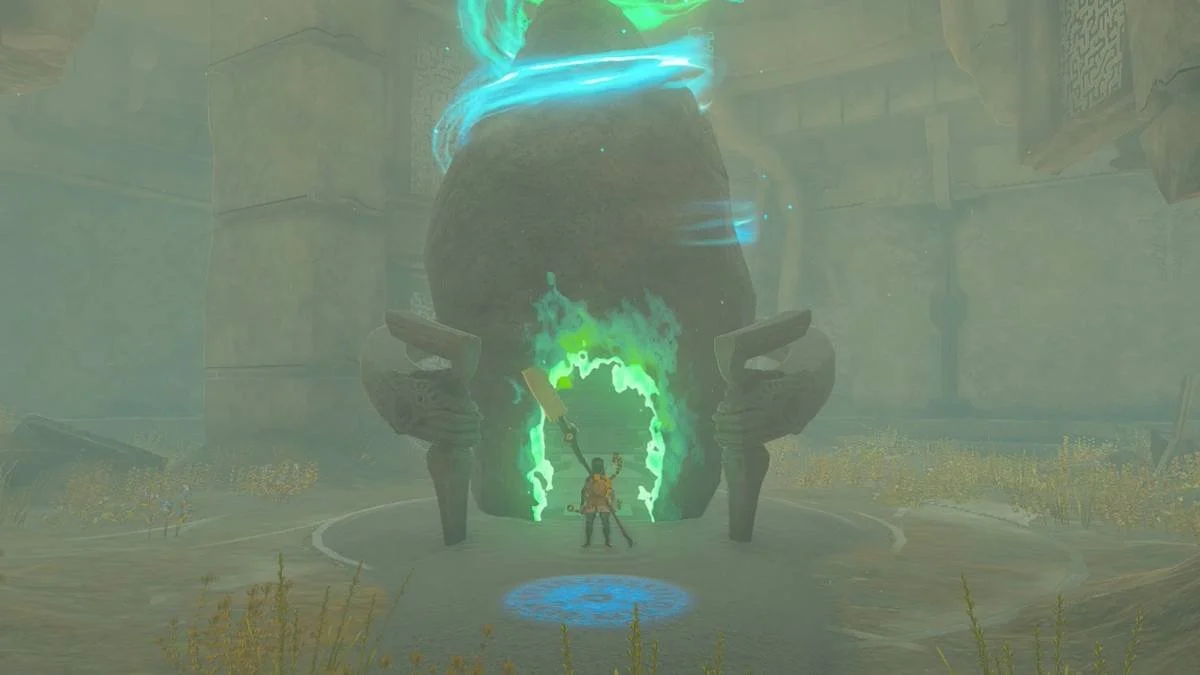
Level design isn’t always about the path the player takes – it’s about the choices they’re given. Thunderhead Isles displays this incredibly well, and it’s what makes it such a standout example of excellent design. If players choose to follow their sense of adventure, they will be rewarded with an experience unlike anything else in the game. It’s a testament to the systems it’s built around, and to the exchange of trust between designer and player. Can the player be trusted to rely on their wits and the lessons taught by the designer? Can the designer be trusted to protect the player’s agency in their games?
Trust and agency are vital elements of game design, and moments like this prove it. By offering different experiences for daring players, Tears of the Kingdom demonstrated its perfect grasp of these tenets, and made a work of level design art that most players will never even see.
