

Designing Horror for Tabletop Games in Pokémon Hopes & Dreams
This post is directly tied to my portfolio piece Pokémon Hopes & Dreams. An album version of this post can also be found on my Linkedin here!
For about two years, I had the honor of being the game master for a group of friends who came together to play TTRPGs during the pandemic. My campaign aimed at replicating the feel of Pokémon, while also creating a wholly original world to explore. It was a great way to flex my creative muscles, and it taught me tons about level design thanks to the players that got to explore the areas I made.
Based on the landscape of New England, I used famous locations and local culture as inspiration for my level design. I particularly looked to Generations 3 and 4 for my game inspiration as well, as I believe they best encourage exploration in their level design.
But while most of the areas I made were meant to match the optimistic wilderness mood of the source material, there was one landmark from the games that I felt I had to draw from at least once: The Old Chateau from Pokémon Diamond & Pearl.
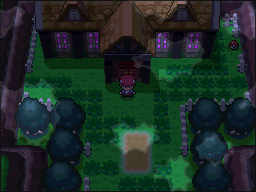
That haunted manor left a powerful impression on me as a child, and I sought to harness the feelings it gave me in my own design. By utilizing the conventions and habits of my players against them, I could instill a terror in them that’s hard to find in tabletop games.
The Entrance
In a town based on Salem, I introduced the Court House as a dungeon for the players to explore as part of their journey. My main goals in designing it were as follows:
Give the players a non-linear experience to investigate on their own
Use visual indicators to highlight puzzles and tell the story
Induce a sense of unease by predicting the players’ habitual choices
The way I settled on to achieve these goals led me to a threefold design. From here, I’ll walk you through the dungeon, and show you how it all played out.
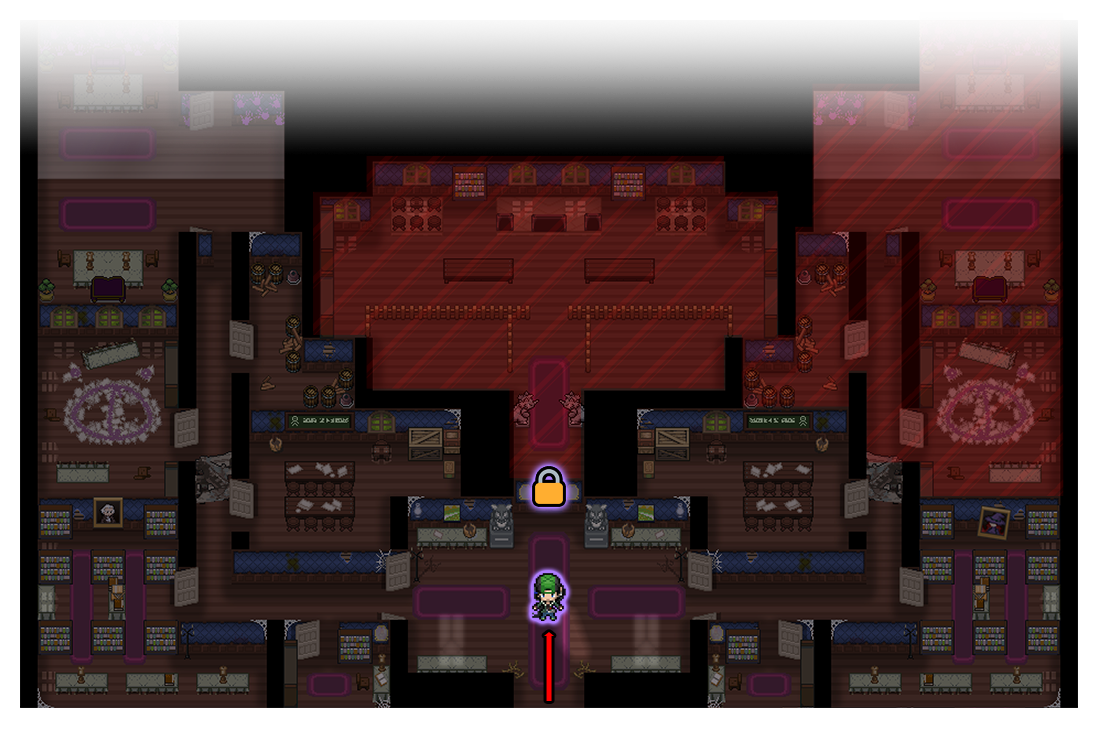
The players entered the building in the southern center room, shown here. The room is made to frame the door to the north, but they will be unable to open it. This immediately presents them with a goal: “I must unlock this door.”
Mirrored Rooms
In any artistic medium, people in western cultures are hard-wired to scan images from left to right. It’s a reality seen in almost every game, where moving to the right is indicative of progress. As such, I made my design to take advantage of it, and lead the players to a dead end. This trick is seen in a few other games with an emphasis on non-linear exploration, most notably Metroid. The players chose to go right from the entrance, leading into an area that is meant to demonstrate the main gimmick: the building is currently mirrored from left to right.
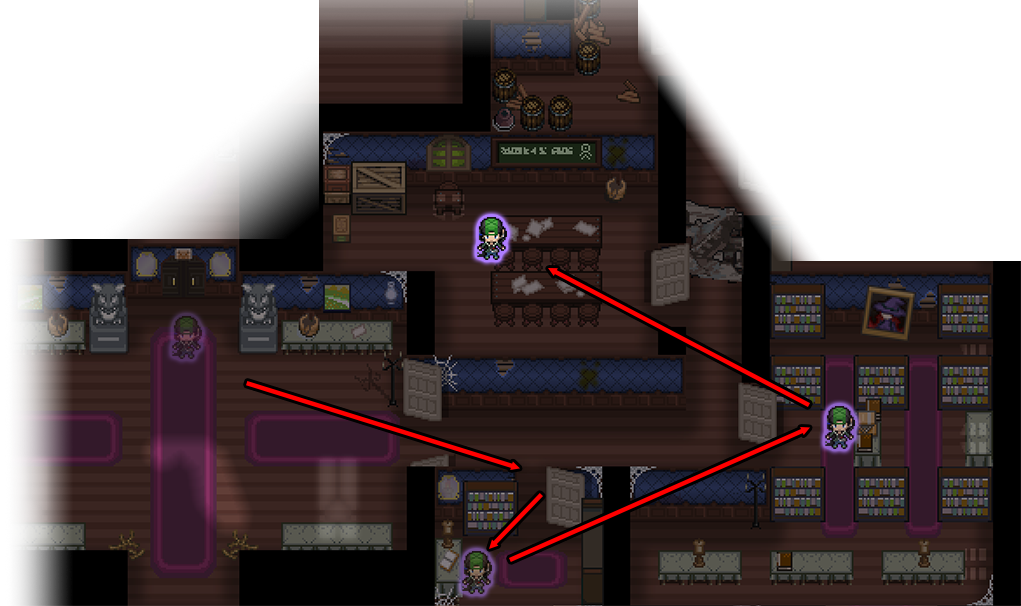
Exploring the rooms shows multiple examples of the mirrored effect, including illegible writing and incorrect reflections in mirrors. They’re also easily drawn to the focal point of the eastern room, a suspicious painting of an unfamiliar person. By investigating their surroundings and absorbing the story around them, the players begin to learn and experiment, but finding a dead end begins to ramp up the unnerving feelings…
Starting Spiral
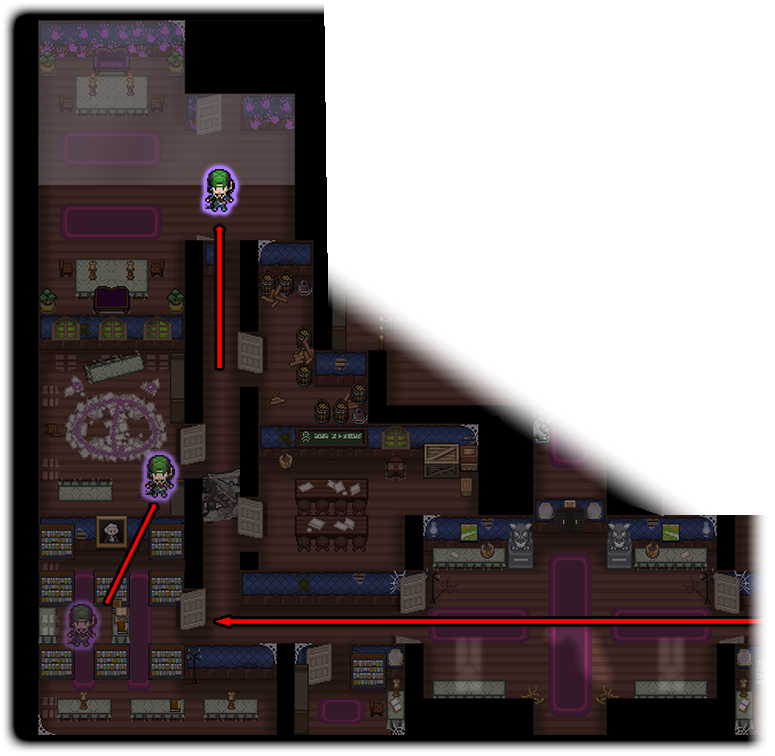
After exploring the right side, the players begin to use their newly-gained knowledge to learn how to proceed. This also sets them on a spiral-shaped path through the dungeon, which instills a winding, confusing feeling in the players appropriate for a haunted house. And to add onto this feeling, an unkillable enemy is introduced as they backtrack, that stalks the halls to ensure they never feel safe.
By referencing the differences between the left and right sides, they begin to notice discrepancies. The painting on the left side is different, and can be knocked loose like its counterpart.
Inspired by Junji Ito’s page-turn scares, the room behind the painting suddenly changes the tone the threat of a new enemy, as well as further unnerve the players. Windows at the back of the room show the forest outside, but there is still another room behind it. This visual adds to the confusion, and will be built upon later.
The final room on the top left is the end of the first part of the dungeon. It turns the abstract mirroring into a physical object, and takes advantage of the static camera angle required for tabletop games to add in an extra spook. Fighting the boss in this room breaks the mirror, and finally clears the building of the curse. The way ahead is once again blocked, but now that backtracking is instilled in the players’ psyche, they know to take a second look around.
New Goals
The next hurdle is getting upstairs. But since the staircase is intangible, which leads the players to look elsewhere. With the mirroring dispelled, there are new rooms to explore on the right, leading to a story moment that introduces the dungeon’s boss and tells a bit more of her story while also offering an item to progress up the stairs.
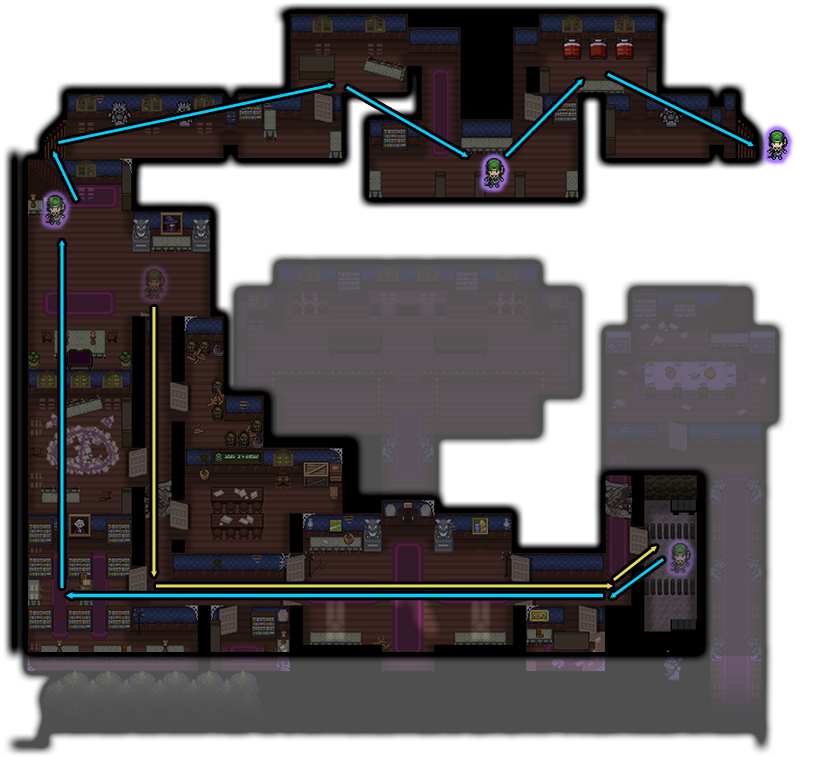
The upstairs rooms serve as a bridge to get around the rubble in the right-side hallways, and a resting spot for players that are running out of resources. They also offer an extra danger later when they have to backtrack through the dungeon one last time to reach the final room.
Impossibilities
Returning to the ground floor and continuing on the spiral path, the players encounter a long straight hallway. Repeated encounters with the unkillable stalker Dusknoir have taught them that places like this are especially deadly, without any way to avoid its narrow gaze. It’s only a matter of time before it appears again…
And as they walk, another issue compounds on the terror: The length of the hallway is longer than the building could possibly contain. It stretches past the front entrance and wraps around it, and as it does, transforms into an impossible, dreamlike landscape.
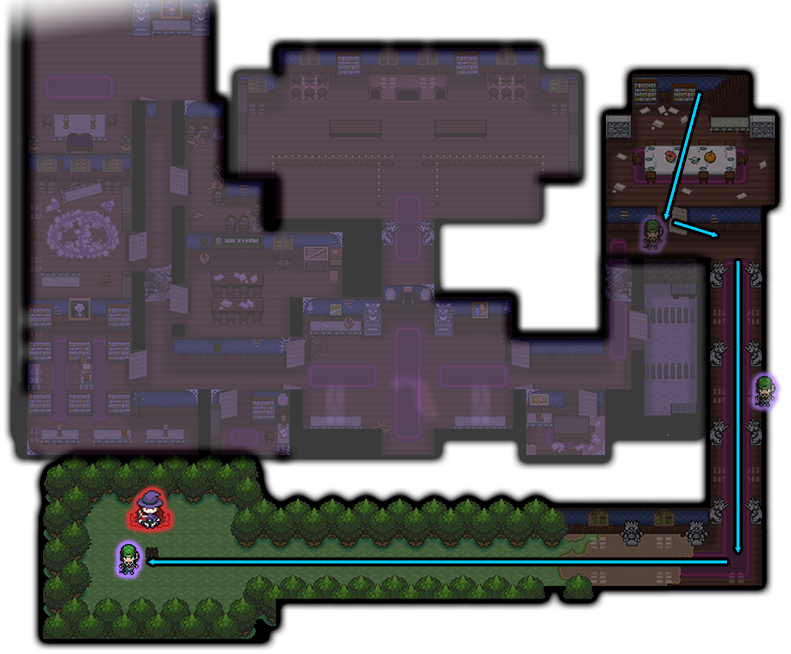
From here on, logic and reality are thrown away completely to rob the players of their remaining comfort. Faced with another dead end in a confusing, impossible place, the players encounter the boss once more time as she reveals her true ghostly form and begins the final phase of the dungeon: a high-octane escape sequence to get out of the building before it burns down with the players inside.
Escape Sequence
The burning phase layout is identical to the previous phase, but with a massive increase in danger. Environmental hazards like fires and broken floors are everywhere, as well as an uptick in enemy encounters. The players must retread the spiral in reverse, falling into the vortex shape’s center toward the boss room.
This shift from slow, atmosphere-based suspense to a loud, aggressive horror requires another page-turner to execute in this medium, but with the right buildup it works perfectly. The players understand how far away the exit is, and after expending so much effort to get this far, have to make it all the way back.
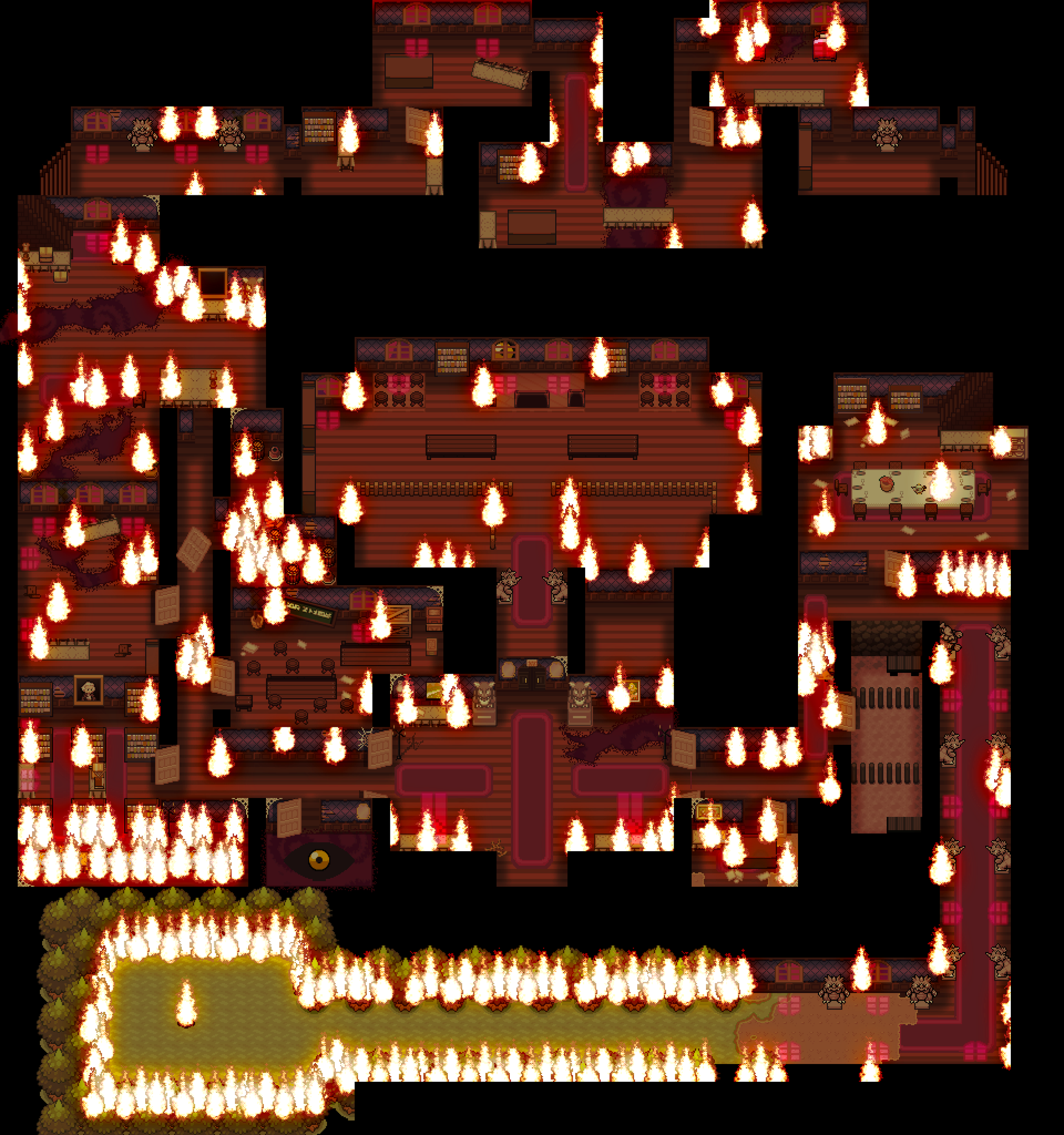
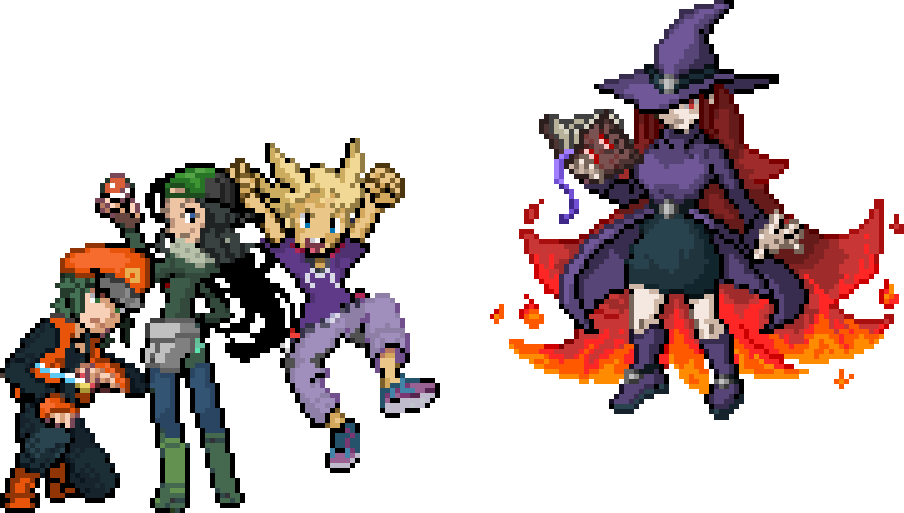
This sets the mood perfectly for the finale, a showdown against an angry phantom and her army of ghosts. If the players found any comfort in the Court House as they explored, the fire ensures it’s taken from them in the last leg of the dungeon. After all, it’s tradition in the hero’s journey to put the protagonist at their lowest right before the climax.
In The End
When my players played through the court house, they met every expectation I had for them. They followed the routes I predicted, seeking the rightward paths first before acclimating.They examined their surroundings, taking in clues and making connections. They were able to set their own pace in the first phase, exploring and letting the discomfort set in slowly.
The deeper they journeyed into the Court House, the more freedom was taken from them. Empty halls were claimed by wandering foes, once cleared rooms changed entirely, and even though the final goal never changed, their distance from it was in constant flux.
When they eventually reached the last climactic change, they took the message they were given to heart and panicked. An immediate, terrifying change in their surroundings pulled the rug from under them, but their experience in the dungeon gave them the necessary knowledge to scare themselves even more when they realized what the level was asking of them.
This way, the pacing of the dungeon was moving in tandem with the players’ feelings, allowing them to stay in tune with their instincts as it guided them in the beginning, and clashed with them toward the end.
I wanted to reflect on the practices I picked up while designing this dungeon and share them, as I think level design in horror scenarios requires extra consideration for maximum success. I’m lucky to have volunteers to test out my designs, and help me refine my skills. Only by experimenting can designers learn exactly what players are thinking, and build around it.
